Included with subscription
A subscription unlocks every workbook. Preview chapters are always free.
Subscribe for full accessSign in to start previewFirst 6 lessons free. Adds to your library so you can pick up later.
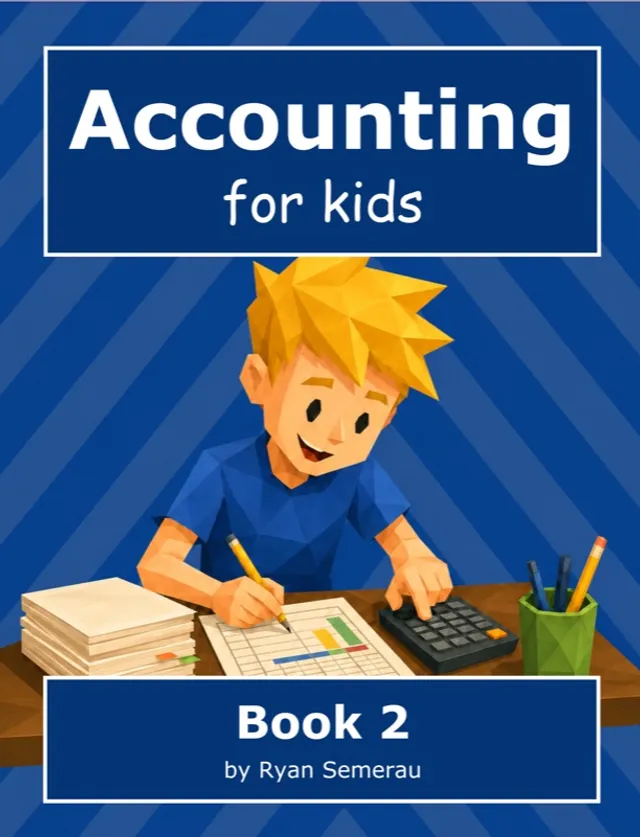
Accounting for Kids - Book 2
by Ryan Semerau
The second book in the Accounting for Kids series. Teaches how to read, analyze, and interpret financial statements - revenue analysis, EBITDA, financial ratios, comparing companies, spotting red flags, budgeting, and cost accounting. Turns number-reading into real understanding.
Contents
16 chapters · 76 lessons · first 6 free- IntroductionFree
1 · Reading the Story
- 1.1 · Numbers Tell a StoryFree
- 1.2 · Start with the Big PictureFree
- 1.3 · Comparing PeriodsFree
- 1.4 · Asking "Why?"Free
- Chapter 1 TestFree
2 · Revenue Analysis
- 2.1 · Is Revenue Growing?Free
- 2.2 · Where Does Revenue Come From?🔒
- 2.3 · Revenue Concentration🔒
- 2.4 · Revenue vs. Growth at Any Cost🔒
- Chapter 2 Test🔒
3 · Cost of Goods Sold and Gross Profit
- 3.1 · Cost of Goods Sold (COGS)🔒
- 3.2 · Gross Profit🔒
- 3.3 · Gross Margin🔒
- 3.4 · Why Gross Margin Matters🔒
- Chapter 3 Test🔒
4 · Operating Expenses
- 4.1 · What Are Operating Expenses?🔒
- 4.2 · Selling, General, and Administrative (SG&A)🔒
- 4.3 · Operating Income🔒
- 4.4 · Watching Operating Expenses Grow🔒
- Chapter 4 Test🔒
5 · EBITDA
- 5.1 · What Is EBITDA?🔒
- 5.2 · Why Strip Those Things Out?🔒
- 5.3 · How to Calculate EBITDA🔒
- 5.4 · EBITDA Isn't Perfect🔒
- Chapter 5 Test🔒
6 · Net Income and the Bottom Line
- 6.1 · Net Income: What's Really Left🔒
- 6.2 · From EBITDA to Net Income🔒
- 6.3 · What Happens to Net Income🔒
- 6.4 · Profit Margins🔒
- Chapter 6 Test🔒
7 · Reading the Balance Sheet
- 7.1 · Current Assets🔒
- 7.2 · Long-Term Assets🔒
- 7.3 · Current vs Long-Term Liabilities🔒
- 7.4 · A Strong Balance Sheet🔒
- Chapter 7 Test🔒
8 · Financial Ratios - Liquidity
- 8.1 · What Are Financial Ratios🔒
- 8.2 · Current Ratio🔒
- 8.3 · Quick Ratio🔒
- 8.4 · Working Capital🔒
- Chapter 8 Test🔒
9 · Financial Ratios - Profitability
- 9.1 · Margin Ratios🔒
- 9.2 · Gross Margin and Operating Margin🔒
- 9.3 · Net Profit Margin🔒
- 9.4 · Return on Equity (ROE)🔒
- Chapter 9 Test🔒
10 · Financial Ratios - Efficiency and Leverage
- 10.1 · Inventory Turnover🔒
- 10.2 · Accounts Receivable Turnover🔒
- 10.3 · Debt-to-Equity Ratio🔒
- 10.4 · Using Ratios Together🔒
- Chapter 10 Test🔒
11 · Comparing Companies
- 11.1 · Why Compare🔒
- 11.2 · Industry Norms🔒
- 11.3 · Size Differences🔒
- 11.4 · Apples to Apples🔒
- Chapter 11 Test🔒
12 · Red Flags and Warning Signs
- 12.1 · Declining Margins Over Time🔒
- 12.2 · Revenue Growing, Cash Shrinking🔒
- 12.3 · Debt Growing Faster Than Business🔒
- 12.4 · Inventory Piling Up🔒
- Chapter 12 Test🔒
13 · Budgeting and Forecasting
- 13.1 · What Is a Budget🔒
- 13.2 · Building a Simple Budget🔒
- 13.3 · Forecasting: Looking Ahead🔒
- 13.4 · Variance: Budget vs Actual🔒
- Chapter 13 Test🔒
14 · Cost Accounting Basics
- 14.1 · Direct vs Indirect Costs🔒
- 14.2 · Allocating Overhead🔒
- 14.3 · Break-Even Point🔒
- 14.4 · Using Cost Information for Decisions🔒
- Chapter 14 Test🔒
15 · Accounting in the Real World
- 15.1 · Who Does Accounting in Real Life🔒
- 15.2 · Auditing: Checking the Checkers🔒
- 15.3 · Ethics: Honesty in Accounting🔒
- 15.4 · You Can Read the Numbers Now🔒
- Chapter 15 Test🔒
What you'll learn
- ✓How to read financial statements and spot trends
- ✓What gross profit, operating income, and EBITDA mean
- ✓How to calculate and interpret financial ratios
- ✓How to measure liquidity, profitability, and efficiency
- ✓How to compare businesses of different sizes fairly
- ✓How to spot red flags and warning signs in financial data
- ✓How to build a budget and compare it to actual results
- ✓What direct and indirect costs are and how to allocate them
- ✓What the break-even point is and why it matters
- ✓How accounting works in real businesses and careers
How to use this workbook
15 chapters, designed for one chapter per week (4 short lessons per week plus a chapter test). Each lesson takes about 15-20 minutes - read the lesson, talk it over with the AI tutor, then answer a few short questions in your own words.
Prerequisites
Accounting for Kids Book 1 (Recording, Organizing, and Reporting). You should understand transactions, the accounting equation, debits and credits, journals and ledgers, and the three financial statements before starting this book.