Included with subscription
A subscription unlocks every workbook. Preview chapters are always free.
Subscribe for full accessSign in to start previewFirst 6 lessons free. Adds to your library so you can pick up later.
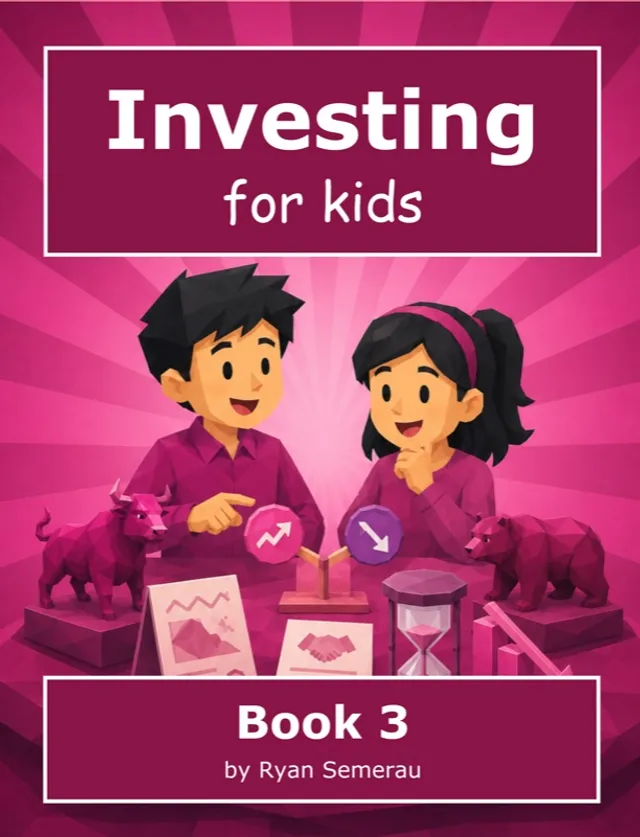
Investing for Kids - Book 3
by Ryan Semerau
The third and final book in the Investing for Kids series. Covers derivatives (options, futures, forwards, swaps), short selling, leverage, passive and active investment strategies, portfolio construction, investor psychology, market history, taxes, regulation, and how to become a complete investor. Brings everything from all three books together.
Contents
16 chapters · 76 lessons · first 6 free- IntroductionFree
1 · Derivatives
- 1.1 · What Is a DerivativeFree
- 1.2 · Why Derivatives ExistFree
- 1.3 · Underlying AssetsFree
- 1.4 · Leverage: Small Money, Big ExposureFree
- Chapter 1 TestFree
2 · Options - The Basics
- 2.1 · What Is an OptionFree
- 2.2 · Call Options: The Right to Buy🔒
- 2.3 · Put Options: The Right to Sell🔒
- 2.4 · Premium, Strike Price, and Expiration🔒
- Chapter 2 Test🔒
3 · Options - How They're Used
- 3.1 · Using Options to Protect (Hedging)🔒
- 3.2 · Using Options to Speculate🔒
- 3.3 · Covered Calls: Earning Extra Income🔒
- 3.4 · Protective Puts🔒
- Chapter 3 Test🔒
4 · Options - Pricing and More Strategies
- 4.1 · Intrinsic Value and Time Value🔒
- 4.2 · In the Money, At the Money, Out of the Money🔒
- 4.3 · Spreads: Limiting Risk and Reward🔒
- 4.4 · LEAPS: Long-Term Options🔒
- Chapter 4 Test🔒
5 · Futures Contracts
- 5.1 · What Is a Futures Contract🔒
- 5.2 · Who Uses Futures and Why🔒
- 5.3 · Margin and Leverage🔒
- 5.4 · Settlement: Cash vs Physical Delivery🔒
- Chapter 5 Test🔒
6 · Other Derivatives
- 6.1 · Forwards: Custom Futures🔒
- 6.2 · Swaps🔒
- 6.3 · Warrants🔒
- 6.4 · Convertible Bonds🔒
- Chapter 6 Test🔒
7 · Short Selling and Leverage
- 7.1 · What Is Short Selling🔒
- 7.2 · How Short Selling Works🔒
- 7.3 · The Risk of Short Selling🔒
- 7.4 · Leverage: Borrowing to Invest🔒
- Chapter 7 Test🔒
8 · Investment Strategies - Passive
- 8.1 · Buy and Hold🔒
- 8.2 · Dollar Cost Averaging🔒
- 8.3 · Index Investing🔒
- 8.4 · Rebalancing🔒
- Chapter 8 Test🔒
9 · Investment Strategies - Active
- 9.1 · Value Investing🔒
- 9.2 · Growth Investing🔒
- 9.3 · Income Investing🔒
- 9.4 · Momentum and Contrarian Strategies🔒
- Chapter 9 Test🔒
10 · Portfolio Construction
- 10.1 · Asset Allocation: The Big Decision🔒
- 10.2 · Diversification Within and Across🔒
- 10.3 · Matching Portfolio to Goals🔒
- 10.4 · Building Your Own Portfolio🔒
- Chapter 10 Test🔒
11 · Investor Psychology
- 11.1 · Fear and Greed🔒
- 11.2 · Herd Behavior🔒
- 11.3 · Cognitive Biases🔒
- 11.4 · Emotional Discipline🔒
- Chapter 11 Test🔒
12 · Bubbles, Crashes, and Market History
- 12.1 · What Is a Bubble🔒
- 12.2 · Crashes and Bear Markets🔒
- 12.3 · Famous Market Events🔒
- 12.4 · Lessons from History🔒
- Chapter 12 Test🔒
13 · Taxes and Investing
- 13.1 · Capital Gains Tax🔒
- 13.2 · Dividend and Interest Taxes🔒
- 13.3 · Tax-Advantaged Accounts🔒
- 13.4 · Tax-Loss Harvesting🔒
- Chapter 13 Test🔒
14 · Regulation, Fraud, and Protecting Yourself
- 14.1 · Who Regulates Investing🔒
- 14.2 · Fiduciary Duty🔒
- 14.3 · Common Scams and Red Flags🔒
- 14.4 · Protecting Yourself🔒
- Chapter 14 Test🔒
15 · The Complete Investor
- 15.1 · Your Investment Policy🔒
- 15.2 · The Lifetime Arc of Investing🔒
- 15.3 · Lifelong Learning🔒
- 15.4 · What Will You Invest In🔒
- Chapter 15 Test🔒
What you'll learn
- ✓What derivatives are and why they exist
- ✓How options work - calls, puts, premiums, strike prices, and strategies
- ✓How futures contracts work and who uses them
- ✓Other derivatives - forwards, swaps, warrants, and convertible bonds
- ✓How short selling and leverage work (and the risks involved)
- ✓Passive strategies - buy and hold, dollar cost averaging, index investing
- ✓Active strategies - value, growth, income, momentum, and contrarian investing
- ✓How to build a portfolio with proper asset allocation and diversification
- ✓The psychology traps that hurt investors and how to avoid them
- ✓How taxes, regulation, and fraud protection affect your investments
How to use this workbook
15 chapters, designed for one chapter per week (4 short lessons per week plus a chapter test). Each lesson takes about 15-20 minutes - read the lesson, talk it over with the AI tutor, then answer a few short questions in your own words.
Prerequisites
Investing for Kids Book 1 (foundations, stocks, and bonds) and Investing for Kids Book 2 (funds, real assets, and alternatives). This book builds on concepts from both previous books.