Included with subscription
A subscription unlocks every workbook. Preview chapters are always free.
Subscribe for full accessSign in to start previewFirst 6 lessons free. Adds to your library so you can pick up later.
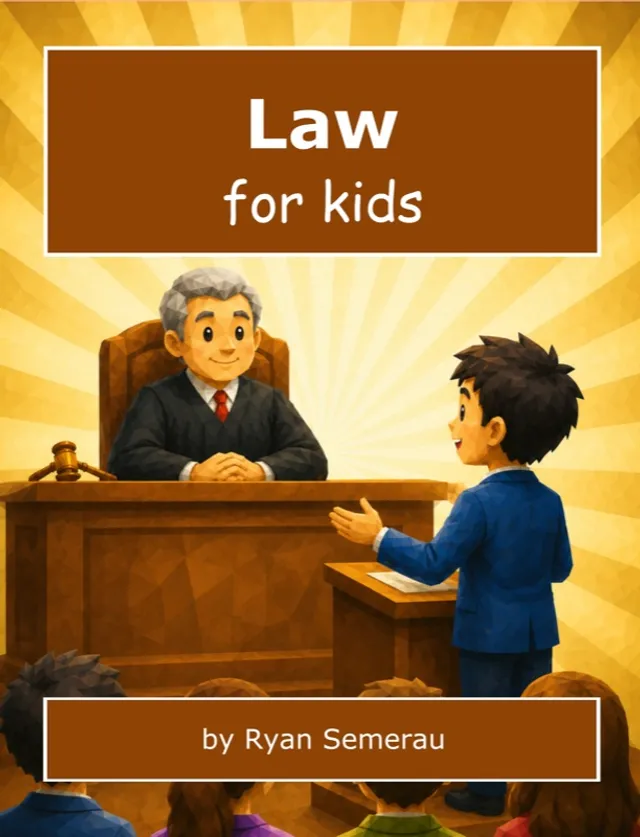
Law for Kids
by Ryan Semerau
Ages 7-12LawCivics
A standalone book that teaches how the legal system works - from how laws are made to how courts operate, what rights are, how contracts work, and what happens when rules are broken. Real legal concepts in plain language for young readers.
Contents
16 chapters · 76 lessons · first 6 free- IntroductionFree
1 · Foundations
- 1.1 · Why Do We Have RulesFree
- 1.2 · What Is a LawFree
- 1.3 · Written LawFree
- 1.4 · Laws Change Over TimeFree
- Chapter 1 TestFree
2 · Where Laws Come From
- 2.1 · Constitutions: The FoundationFree
- 2.2 · Legislatures: Making New Laws🔒
- 2.3 · Regulations: Filling in the Details🔒
- 2.4 · Common Law and Precedent🔒
- Chapter 2 Test🔒
3 · Types of Law
- 3.1 · Criminal Law🔒
- 3.2 · Civil Law🔒
- 3.3 · The Key Differences🔒
- 3.4 · Other Areas of Law🔒
- Chapter 3 Test🔒
4 · Rights
- 4.1 · What Is a Right🔒
- 4.2 · Constitutional Rights🔒
- 4.3 · Other Rights🔒
- 4.4 · Rights Have Limits🔒
- Chapter 4 Test🔒
5 · The Court System
- 5.1 · Trial Courts: Where Cases Start🔒
- 5.2 · Appeals Courts: Reviewing Decisions🔒
- 5.3 · The Supreme Court🔒
- 5.4 · Federal vs. State Courts🔒
- Chapter 5 Test🔒
6 · People in the Legal System
- 6.1 · Judges🔒
- 6.2 · Juries🔒
- 6.3 · Lawyers🔒
- 6.4 · Parties and Witnesses🔒
- Chapter 6 Test🔒
7 · How a Case Works
- 7.1 · Starting a Case🔒
- 7.2 · Discovery: Gathering Information🔒
- 7.3 · Settlement and Plea Bargains🔒
- 7.4 · Trial and Verdict🔒
- Chapter 7 Test🔒
8 · Evidence
- 8.1 · What Is Evidence🔒
- 8.2 · Types of Evidence🔒
- 8.3 · Admissibility🔒
- 8.4 · Burden of Proof🔒
- Chapter 8 Test🔒
9 · Arguments and Reasoning
- 9.1 · What Is a Legal Argument🔒
- 9.2 · Building an Argument🔒
- 9.3 · Using Precedent🔒
- 9.4 · Logical Reasoning🔒
- Chapter 9 Test🔒
10 · Torts
- 10.1 · What Is a Tort🔒
- 10.2 · Negligence🔒
- 10.3 · Intentional Torts🔒
- 10.4 · Strict Liability and Damages🔒
- Chapter 10 Test🔒
11 · Contracts
- 11.1 · What Is a Contract🔒
- 11.2 · The Elements of a Contract🔒
- 11.3 · Breach of Contract🔒
- 11.4 · Remedies for Breach🔒
- Chapter 11 Test🔒
12 · Criminal Law Concepts
- 12.1 · Elements of a Crime🔒
- 12.2 · Intent and Mental States🔒
- 12.3 · Degrees and Categories🔒
- 12.4 · Defenses and Sentencing🔒
- Chapter 12 Test🔒
13 · Property and Ownership
- 13.1 · What Is Property🔒
- 13.2 · Real Property and Personal Property🔒
- 13.3 · Intellectual Property🔒
- 13.4 · Property Disputes🔒
- Chapter 13 Test🔒
14 · The Constitution and Government Power
- 14.1 · Separation of Powers🔒
- 14.2 · Checks and Balances🔒
- 14.3 · Federalism🔒
- 14.4 · Due Process and Equal Protection🔒
- Chapter 14 Test🔒
15 · Law in Everyday Life
- 15.1 · Law Is Everywhere🔒
- 15.2 · Knowing Your Rights🔒
- 15.3 · Resolving Disputes Without Court🔒
- 15.4 · Law as a Living System🔒
- Chapter 15 Test🔒
What you'll learn
- ✓What law is and why societies have laws
- ✓Where laws come from - constitutions, legislatures, regulations, and courts
- ✓The difference between criminal law and civil law
- ✓What your rights are and where they come from
- ✓How the court system works - from trial courts to the Supreme Court
- ✓The roles of judges, juries, lawyers, and witnesses
- ✓How a case works from start to finish
- ✓What evidence is and how it's used in court
- ✓How legal arguments and reasoning work
- ✓What torts, contracts, and property law are
- ✓Key criminal law concepts like intent and burden of proof
- ✓How the Constitution limits government power
- ✓How to resolve disputes and know your basic rights
How to use this workbook
15 chapters, designed for one chapter per week (4 short lessons per week plus a chapter test). Each lesson takes about 15-20 minutes - read the lesson, talk it over with the AI tutor, then answer a few short questions in your own words.
Prerequisites
None. This book stands alone.